
The world might need your rage – thoughts on this and other negative emotions
(17 minute read time)
Recently I was in a therapeutic setting where the topic of rage came up. I raised it. As a person of faith deeply influenced by Buddhism, Abrahamic archetypes of God and indigenous spirituality, as a Naropa graduate of their Transpersonal Psychology / Ecopsychology program, and as someone raised partly by New Age and other spiritual teachers since childhood, rage doesn’t always sit well with me. In the context of attempted spiritual enlightenment it’s often seen as a particularly shameful emotion, and one that I nevertheless tend to naturally carry a fair amount of.
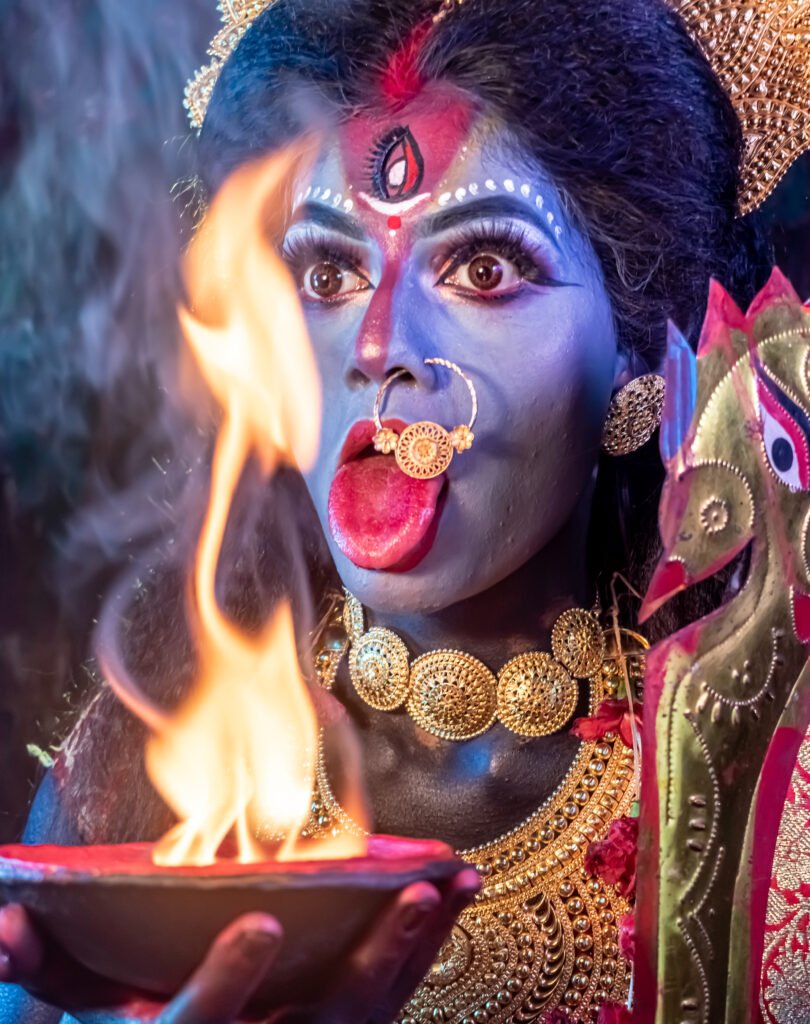
I’ve seen liberating articles recently targeting the concept of female rage specifically– how it’s often pathologized, or socially discouraged and regarded with shock and contempt. In the Hindu tradition, the story of Kali Ma, often lingers in my mind when this emotion takes over me. She is one of the fiercest and most visually terrifying of Hindu Gods, one of the most globally famous, and one that to those outside of that culture may appear as a demon.
Her story, however, is one of a great mother. To paraphrase her story lightly (as a secondary source outside of the culture) Kali Ma was angered that the world was filled with evil and demons, and their evil had grown so profound she was birthed and transformed into her most vicious and terrifying form and set out to slaughter all of the demons which had infested the world. She is often depicted with a sword, beheading one of them, wearing a garland of severed demon heads around her neck as her boon and adornment. To the outsider, one might mistake them for human men, and to those that see where I’m going with this, or who have been following news around things like inhumane American concentration camps and forces, and the Epstein files, perhaps it’s intentional we may at first glance find the difference between some men and demons at times nearly indistinguishable.
In the story of Kali Ma, her rampage is so vast and intense that it becomes, as rage does, perhaps a bit out of hand. Her loving husband, Shiva, lays down before her, and it is said that this act of humility shocks her back into a more benevolent form. Without his intervention, she may have destroyed and eaten the entire world.
Recently, a fellow activist mentioned this quote to me from leftist philosopher Slavoj Žižek, paraphrasing a Hegelian idea from Phenomenology of Spirit: “evil resides in the very gaze which perceives evil all around itself.”
It is something that I, especially lately, needed to hear. I often meditate on the story of Kali Ma’s rage that both saved the world, and nearly ended it. But the world would not be a better place without her, and she is often misunderstood by those who do not see her as a divine mother of safety and protection.
As Climate Collapse continues to loom in tandem with a rise in bold, proud fascism, I sense that we are at a similar juncture in history where her story, for those of us who still feel anything at all, may deeply resonate.
Rage isn’t evil, only unchecked, or misplaced rage is. From a psychological standpoint, rage often is the emotion we feel before we are safe enough to mourn and feel sadness. Sadness in our culture, especially for women or those with less respective political power, is the default societal expectation. But for those of us who are angry, we also deserve to know that this human emotion is beneficial as well.
In college undergraduate studies I was taught about the theory of “rage boiling up that must be released” postulated by Nazi psychologist and philosopher Lorenz. Our teacher, a pretty cool dude, probably introduced Lorenz as a Nazi researcher on purpose so antifascist students like myself might perk up and listen. Lorenz was incredibly influential in American psychology circles, suggesting that all humans had rage that would fill up like a bowl and “overflow” if it was not periodically let out and emptied cathartically. Strange therapies like “primal screams” that were popular a few decades ago were likely inspired from his influence. “Feeling Mad?” these therapists asked “Go scream into a pillow!” (or the woods, or whatever). Even in my graduate program at Buddhist Naropa, the sanctity of the “primal scream” was considered as a noteworthy ecotherapy tactic.
And while I think we need to channel and outlet what we feel, importantly, the data of modern times doesn’t exactly back up Nazi Lorenz’s theory: In fact, an angry mind, can easily stay pretty angry, and the more we indulge in our rage, sometimes the more it can pop up, much like an addiction.
I suspect all or most human emotions are like this. In treating this like a diary now I won’t pull a bunch of peer reviewed journals to support the anecdote as it’s too complex, but if college professors know Lorenz’s theory was in many contexts disproven, and compared with studies more recently on Maitri (loving kindness) meditation that found practicing the cultivation of the emotion of love strengthens it, we know the brain’s neurocircuitry acts a bit like drops of water carving the grand canyon: “What fires together, wires together” we are told. Meaning, the emotions and mental loops you are often in, gradually carve out massive structures in how you will be prone to think and operate in the future. The more you indulge in anger, sadness, love, joy, excitement, curiosity, the more your personality conforms to those habits, where accessing these emotions you habitually practice becomes easier, stronger, and more ingrained.
This is why many Buddhists and hyper positive Christians like Dolly Parton I think always strive to be peaceful, because it is also valid to temper the mind like one might exercise the body. If meditation and peace is like a tempering workout for the healthy mind, rage and depression and other negative emotions can be like giving it a repetitive muscle strain. And, we do know, too much cortisol, stress, anger, can and often does hurt ones mental wellness and longevity, putting you at risk for other neurodegenerative issues later in life –let alone considering the potential immediate interpersonal ramifications.
Maybe that’s what’s so powerful to me about the metaphorical teaching of the story of Kali Ma and her husband. That rage is still sacred, but it also must eventually be stopped. As sacred as her form is, it must ethically come to an end, before it takes too much. Kali Ma isn’t angry because she’s evil or bitchy like what most modern people say about the angry feminine, she was angry because she deeply loves and seeks to protect and bring justice. In some regards, at the moment of her transformation, perhaps no other god in this pantheon loved and so sought to heal the world more deeply.

What are the negative emotions eating you lately? And how are they sacred?
Here are some common ones I’m seeing in my world these days, and how I might reframe them from the perspective of positive evolutionary psychology– and how, as we experience them, we may protect ourselves and others we love:
Rage
Anger and these similar emotions come from a sense that something is unjust, and you have the power to do something to stop it. Sometimes we project anger at other people or things to avoid attacking something that seems too big to fight. In many therapist offices, identifying what really angers us can sometimes set us free. For example, deeper reflection may help us to see that we’re not mad at the innocent barista who messed up our coffee order, but maybe at the enshittification of corporate customer service in general. Maybe you’re not mad at the way a colleague spoke to you, as much as you are mad at an abusive parent who used the same tactics or phrasing when you were especially vulnerable. When we can identify something we’re angry at truthfully, we protect ourselves from harming those who are innocent by mistake or misdirection, and we can keep it more productive, targeted, and proportional. When we embrace our righteous anger, we are also embracing our sense of energetic force to do something, to will justice into existence.
Depression
Sadness and depression and similar emotions for me and many others may often be buried under rage. This can also encompass despair. Many therapists and psychologists have suggested that depression is anger turned inward. Instead of hating the self, or feeling powerless, a way to transmute this energy is to allow yourself grief and mourning. Mourning for what could have been. Grief for how you or another innocent person were treated. We don’t need to feel like the world will never be just again, or like giving up, if we can accept that the world and life are complex and diverse, and there will always be hurt and loss in the human condition. Grief honors this better than despair. Grief tells us what is lost did matter, and was loved, but that other things that matter that we love also still exist, and will exist again. There are still good things in life to live or fight for. But in order to see them, we must at least feel the grief and acknowledge the pieces of life we loved that were lost. I suspect depression and despair may come from a type of emotional constipation around embracing grief and mourning– by saying goodbye fully, we acknowledge that individual losses, do not represent the totality of our life experience. We are meant to mourn what we have lost. And in the impermanence of life, that could be a lot.
Loneliness
I almost left this one off because it feels so environmental, but there is a loneliness epidemic today, and its worth mentioning that loneliness can happen even if you have a lot of loved ones or are in a crowded room, and in these instances it is sometimes even more profound. A positive spin on loneliness, like other forms of pain, is your brain signaling “something is wrong”. It may be as simple as just getting out there and learning to socialize especially for young people raised through the pandemic. Or, maybe the group of people surrounding you (even groups we are born in, or otherwise placed into) is not as healthy as you consciously might assume. There’s a quote, “before you diagnose yourself as depressed, make sure you’re not just surrounded by a-holes” and I think it’s worth mentioning this here. Loneliness is so widespread, that in a way, I feel like it may be easier to solve today than before: everyone could use better friends these days, and there’s a whole essay to write for another day on society’s engineered loneliness to prevent things like mutual aid and genuine community through the removal of accessible third spaces. To transmute this, I find it helpful to remember we will always be “alone” and unique in our human condition sometimes, because none of us think exactly alike nor should we. Just because you are an individual, does not mean you can’t discover beauty in others, and boy, would others like to be seen and valued more these days at scale. Appreciating how you are different without pathologizing it, while being curious about truly seeing others, may be a fast first step to healing this. To be loved is to be seen. In an age of hypnotic screens, many of us have forgotten to see others.
Numbness
This is one of my least favorite (non)emotions to witness in others. As someone who believes in sacred rage and has learned by necessity to be somewhat comfortable processing grief, sometimes it’s the numb people who make me really angry and impatient. But numbness, dissociation, and other similar states of oblivion do serve an evolutionary purpose. They help our minds catch a break from other states that are too overwhelming. Have you ever just been so stressed out that you needed a nap? Well, that’s perhaps a similar analogy to why we’ve evolved to have the capacity to dissociate. It’s a protective measure. The brain’s hedgehog-like volvation mode if you will. It allows you to function later if you can avoid the overwhelming pain now. It easy for someone like me to see this as one of the most dangerously negative “non-emotions” we have today, because I do suspect many of us are doing this as economic and ecologic existential pressures exponentially rise. Like anger, sadness, and loneliness, you are not evolutionarily meant to “camp out” here forever.
The perils of numbness are maybe in part why I’ve written this today. We’re not meant to stay in any of these states forever. They are protective shields and meant to be temporary states of warning–ideally eustress to make us act. If you’re like me and notice yourself lingering in one or a few more than others, struggling to shift out or transmute that energy, it’s worth understanding why the mind evolved to feel crappy (or nothing) in the first place, to harness that to your benefit, rather than your detriment.
I don’t think good leaders can lead, or any of us can thrive as healthy engaged citizens without having deep and honest awareness of our emotions (or lack thereof). As much as people want to pretend their choices in leadership may be data driven or “logical”, I suspect more often than not they are not. And for those of us who enjoy the esoteric and complex interdisciplinary science, and who understand the value of and reasons behind human emotions, we know our emotions themselves are important data too. “Going with your gut” is also highly praised in the business world, and that is a purely emotional and intuitive endeavor. (Blink, by Malcolm Gladwell, is a really enjoyable book on this).
People who don’t examine their emotions will not be able to target the source of them and so may not be able to leverage that data in a useful or healthy way. And in the age of Climate Despair, with a lot of angst even for the climate denier camp, knowing what we’re feeling may be an especially powerful, if not imperative, tool.
Postscript: On Greed and Fear
I’m not really sure if the states of greed and fear exactly count as emotions, they seem more abstractly tied to our survival in a way I instinctively want to categorize differently, but after mulling this article over for a few days it dawned on me these too are deep driving forces for many societal leaders (and humans in general) that profoundly shape our present climate. These might be too politically loaded for a short article here today, but I wanted to highlight them as considerations for other negative emotional states we may want to be more thoughtfully aware of.
With respect to each, like the others, there is a sense of shame in feeling either of these as well for most. Greed is in most communities almost always frowned upon, and fear, while very human, must frequently be pushed through in order to thrive and grow. I feel I have less answers for these states of being personally in the structure of this original essay, but I do think they are deeply related in the sense that a hoarding of resources likely stems from pathological fear, and fear, like other emotions, can indeed be misdirected and left unchecked. In my anecdotal experience, for what it’s worth, people who have strong community ties and deep trust with those communities seem to have less propensity for greed. In some circles we might highlight the concept of mutual aid as an explanation for how strong communities and social ties help us to understand the importance of fairly distributed resources (something that we on a social-global scale could surely use a refresher on). If you know that you can rely on your neighbors and friends to have your back, you may need less resources stockpiled. Perhaps that is why the “prepper” community is often disproportionately right libertarian leaning, which highlight individualism more than communal strength. In actuality, prepping is only as good as the community one is in, and individualist prepping, in my opinion, is a sign that we have possible resolved ourselves to expecting, rather than mitigating, larger scale collapses. Hyper individualism is an interesting social shift in modern times– so interesting and complex, that it’s probably an article for another day.
We started this article on the concepts of spirituality I’ve been inspired and shaped by, and I do think from these contexts I have meaningful thoughts on fear. In psychology studies on the benefits of having faith, researchers found that people tend to lean into spiritualist explanations especially when material times are rough, and, unsurprisingly, a healthy type of faith or spirituality for those who are interested in this has been shown to help with emotional and psychological resilience in tough times.
One thing I have learned from my own studies in spiritualism and transpersonal psychology, in faith, is that it helps us to fear death less, and personally, anecdotally, I have never lived life more fully than during the times that I felt at least philosophically unafraid of death. If death is just another journey, another rebirth, there is less to grip onto, or to hoard, or run from, and in some spiritual schools of thought, it is only from this place that we may truly appreciate the impermanence of life, –paradoxically to live it more fully and effectively.
For the materialists out there, an analogy may be this: if you were in an emergency situation, do you want the calm person, or the panicked person, calling the shots and helping you? We all know decision making is better when we are calm. While fear has its evolutionary value as articulated in the acclaimed book “The Gift of Fear”, finding balance in this may be a profound shift for many, if not all of us. In my personal life experience, the less I have existentially feared death (or anything pettier that may bring us even an angstrom closer to it), the more I tended to have a calmer, more collected handle on life.
Setting aside fear of death does not mean you try to Evel Knievel yourself off a bridge for funsies, more so that if you’re running late to work, thinking, “omg, I’m going to get fired, then I’ll get evicted, then trafficked on the streets, and then I’ll die a slow horrible painful death there!”, you might work to set all that that aside, drive safely, remain kind, and arrive alive.

Shameless Corporate Plug
I coach people on thematic tools like these and other considerations for leaders that want to be mindful and long-range in their thinking and impact. I’m also polishing two pilot courses this season on the topics of Ecological Identity and Healing Burnout, and will be releasing a future course on Deep Ecology in Business and Ethics in 2027. Thanks for sticking around, your support and interest in this kind of work is meaningful.
No responses yet