
For the past century, the field of Institutional / Organizational Psychology has been growing as a popular discipline focused on how organizations function and how to understand and control their mechanisms. As an Ecopsychologist in a newer subfield of psychology, connected to the adjacent field of Deep Ecology, the current needs of our world necessitate a blending of these and adjacent studies to meet the needs of functional global habitats –and to understand our interconnected psychology in order to accomplish this.
While I/O Psychologists may study subsets of topics such as cult deprogramming, how to make workers stay longer hours and be more profitable, or how power is garnered and kept within hierarchical organizations, Organizational Deep Ecology borrows a portion of these topics and integrates them into the social science study of Deep Ecology: an environmental philosophy that emphasizes the inherent value of all living beings, advocating for a fundamental change in how humans relate to nature, moving beyond viewing it solely as a resource for human use.
Organizational Deep Ecology combines this goal of Deep Ecology with human-centered Organizational / Institutional Psychology, to envision a world where human networks and systems coordinate in service of healthy ecosystems and a healthy biosphere as a whole.
Under extractive profit-driven models, the primary models of a majority of organizations within our current global context, Organizational Deep Ecology is both necessary and aspirational, something that ostensibly may feel both ancient from the past and very distant in the future, but it is in fact a necessary perspective shift for the turning point the world is in now.
Within the context of global climate collapse and late capitalist conditions of expansive and staggering wealth inequity, it has become clear to many that a massive shift is necessary in how we organize collective work to ensure our human (and “more-than-human“) habitats remain intact. Already, as industrial philosophies command political, material, and economic agency over all others, we see basic needs like clean water, clean air, clean space and human rights threatened in unprecedented ways, ways that perhaps have never been seen by our species at this scale before.
While some may argue the great volcanic winter of ~536 AD, or other large-scale catastrophes and natural climate cycles are simply a part of massive yet natural cycles of life and death on earth, the mechanisms of climate change and other industrial pollution concerns are inherently preventable and socially-driven, and, from an ecopsychological perspective, represent a sort of state of “mass psychosis” –where money, an invention meant to serve as a token of trade to support exchange of goods and labor, has ballooned into a status that has for many completely abstracted sociopsychological consciousness from acknowledgment of our material reality. We speak of the stock market as if it is as important as our biospheric ecosystems, when in reality, it is a representation of goods and services which still ostensibly relies on on these systems as foundational to exist at all.
“When the last tree has been cut down, the last fish caught, the last river poisoned, only then will we realize that one cannot eat money.” –Native Proverb
And while such sentiments have been relegated in our pop-corporate world as the musings of the bitter and radical, I suggest from an academic standpoint and an indigenous activist that this is in actuality a more sober take on our present circumstances. It is a more logical, material reality than the present emphasis on hyper-individual capital.
Years ago, I worked for a “Green Growth” network without realizing the term itself had been coined by capitalists who hoped to cash in on the impending climate collapse –a collapse, which paradoxically, the largest corporations effectively were responsible for and actively hid from the public. I recognized early on that the line between Greenwashing and helping pragmatically was blurry, and even considered this business (Rewild Ecopsychology) in its early iterations as a place where corporations could skirt that line– I would teach you how to make your agency more sustainable, and in exchange, perhaps we could pragmatically offset the costs by using cleaver marketing to expand into new customer markets. Maybe such companies would even profit more or be last standing in “the survival of the fittest“. Win win.
This intuitive assumption is articulated and expanded exponentially within the larger cult of Green Growth, which, while perhaps well meaning, takes this concept extremely seriously. It is risky yet necessary to admit, in a capitalist society, Green Growth is not logically likely or even mathematically possible in its extremes. Capitalism requires infinite growth of profit, and infinite growth is simply not possible without massively devastating consequences, like the permanent destruction of invaluable environments and ecosystems, and an inevitable return to systems akin to feudalism or slavery. Capitalism requires extraction, and that extraction, especially during late capitalism, necessarily comes from public commons and public labor — our ecosystems, and ourselves.
This system also leads inevitably to greater and higher forms of authoritarian control: where the capitalist amasses resources and laborers at an exponential rate (see: the worlds first ever trillionaire), while larger and larger swaths of humanity see rising cost of living, diminished human rights, analogs of slavery, and an increasingly bleak environmental future. It is radical to suggest to those within the cult of capitalism that climate change in particular is not simply driven by normal ebbs and flows of earthy climate shifts, and for the rest of us, we recognize these groups must cling to this antiquated and heavily propagandized belief to rectify and justify the obvious: that the capitalist system leads to extreme and unprecedented consolidation of power and systematic collapse, both socially, and ecologically.
There is no single, simple answer to addressing these concerns. Even under socialist systems –the presumed antidote to capitalism– there is a slight recurring risk of hierarchical exploitation and political rot, where in theory government could take the place of corporations in the rank-and-file’s eventual race to a proverbial, and exploitative, “top”. In cult research, it is clear that humankind is enamored with power, leadership, and like other social species, we are want to follow or lead. A social society will still seek out leadership and instruction, and so corruption can in theory exist in government hierarchies as much as they can within our present world where libertarian corporations tend to carry more power.
On both sides of the isle, there is finger pointing. Libertarian capitalists will (wrongfully) blame government regulations for the world’s ills, and some sects of socialist will imagine that hyper-regulation and socialization of all goods and services might be the sole solution to healing mass inequity and social-environmental instability. I believe this may sadly be more nuanced. In Buddhism there is a concept called “The Middle Way” which I think may serve as a light metaphor here: all organizations -capitalist or not- carry a risk of authoritarian hierarchical corruption and material imbalance. And while socialism and direct democracy strives as a theoretical concept to rectify this, we humans simply do love our leaders, and our coordination, and the challenge of coordination –which often, but not necessarily, defaults to hierarchical structures. Coordination in many cases appears to require some hierarchy, or at least urgent objectives may tend to.
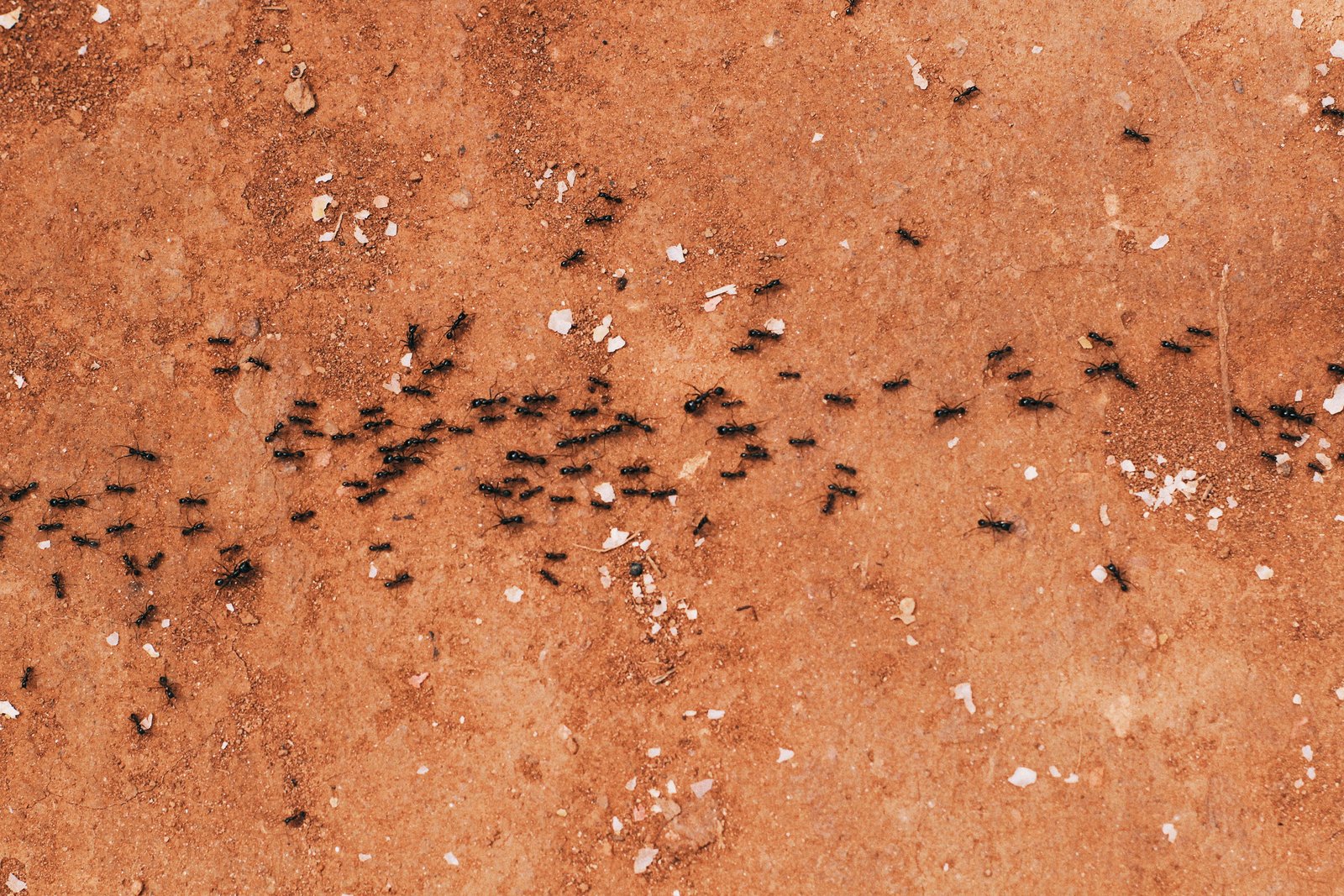
And like ants, we are not able to survive easily alone.
So arrives the term I like to call Organizational Deep Ecology. This term I have developed comes from the marriage of Organizational Psychology, Ecopsychology and Deep Ecology, where we understand that human behavior will inevitably rely on coordination and social fabric as a social species– we would not have evolved this far and wide without our capacity for united teamwork. In our newly globalized society, the tribalism of old no longer serves the collective will of the entire species –where doomsday clocks and pollution that crosses international borders may threaten our very survival if we cannot learn to diplomatically get along.
In Organizational Deep Ecology, we look to the health of entire ecosystems and the entire planet as a guide point for how we conduct ourselves, and we apply this to all organizational systems, government and “private” alike, to ensure a livable future for the majority of earths inhabitants, human and non-human alike.
One might say this is new, aspirational, confusing, or just the beginning, and they would be right. Deep Ecology is often criticized and mischaracterized as something which no socially-networked human could even accomplish: “What will you do as a Deep Ecologist?” the skeptic may ask, “Cut up your credit and social security card, move out into the woods alone to forage?” and of course, the pragmatic answer is no. As a social species, we cannot accomplish Deep Ecology effectively as individuals, even if the concept is only known by scarce individual scholars now. Hyper-individualism is a relic of the past, something that was in fact promoted to us at scale in service of outdated systems of capitalism. No, this process is one that ostensibly will need to be driven by gradual progress, platformism, and reforms, as much as more adjacent revolutionary work.
“But the powerful, the wealthy, they’ll never stand for it!” –a conspiracy-minded dissenter might reply. And they would be semi-correct as well. That said, a lack of Organizational Deep Ecology (and/or related concepts) produces a world at greater risk of Climate Collapse and Nuclear Holocaust, so I’m still placing my bets that even the highest up on these rungs of various authoritarianism (corporate or government) may have the wisdom to learn and to listen.
The Earth craves balance. We will neither flourish collectively, meet societal needs, become space faring or enjoy any other positive next step in the chain of evolution without addressing our species propensity for toxic hierarchies and trite tribalist competition. And while I do not believe all hierarchies are toxic (if a large fire happens, and a fire chief with 20 years of experience shouts some urgent coordinating orders, I’m very very likely to listen) I will wager that a vast majority of especially longstanding, highly organized hierarchies often are at odds with our collective well-being. The desire we all share to worship, be worshiped, follow or lead, is instinctive and strong, but we must evolve out from confusing this sometimes comforting instinct for logic in our global context –our very survival likely depends on it.
Organizational Deep Ecology is still being formed in my own research of how we educate and reconstruct organizations to become ecologically and planetarily sound in our rapidly changing, and wounded times. The earth has already taken a considerable hit, and countless human lives and species have already been needlessly lost to preventable deaths which should have been avoided, in systems that still continue today.
No one ideology can “save the world” alone. And people like myself who coin terms like these or seek such solutions we must also sometimes pause and appreciate life for what it is, setting aside our pesky savior complexes. Nevertheless, I believe Organizational Deep Ecology is yet another path to a more verdant and livable future, one where humanity enjoys universal basic rights, higher equity and quality of life, better ecosystems, and a clearer vision of why and how we organize and coordinate effectively. Not only would such post-scarcity contexts be healthier for all living beings and ecosystems, but they would also be more enjoyable, and in some cases easier to sustain.
We have all been born into a global system of capitalism which has taught us that this is the only economic system that exists: and that is simply untrue. It’s is the only one we in our present generations have ever known, but trade, labor, goods, services, have been a hallmark of all human societies long before it’s invention, and will be with us long after.
And, true to my originally –rightfully criticized– “Green Growth” and perhaps even Greenwashing roots, I do not think even capitalist companies or government organizations enamored with keeping power must shy away from radical concepts such as these. Will they attempts to water down and co-opt them? Surely, as they always have done. But is it in the best interest of all that our planets living systems remain livable? Indeed, this is equally if not more true, even for those most cushioned from the fallout, who have orchestrated the most power-consolidation and damage. I find it hard to imagine that a majority of laborers and administrators will be unable to see the necessity of such transitions in order for our world to continue to sustain intelligent life –ours or any others.
If you’re interested in Organizational Deep Ecology and it’s development in the future, I welcome you to stay connected here at Rewild Ecopsychology, where the first ever course on this concept is slated for release in 2027-2028.
A note on the blog: all blogs on this site are subject to slight changes over time to update drafts for clarity and accuracy, and are sometimes published quickly with mild errors to keep up with our fast moving world. Thanks for your understanding of such imperfections and impermanence.
Comments are closed